top of page
%2C%20white%20blue.png)
%2C%20white%20blue.png)


A Living Vascular Graft
A living graft made from the patient's own cells, seeded and implanted in the same surgery.

Regenerate
The patient's cells build new tissue as the scaffold dissolves, leaving a living vessel.

Implant
The surgeon attaches it like any other graft, in the same operation.

Seed
Our scaffold, plus the patient's own cells from a small fat sample.

_10x%202_rgb_CH(Cy3)_CH2.jpg)
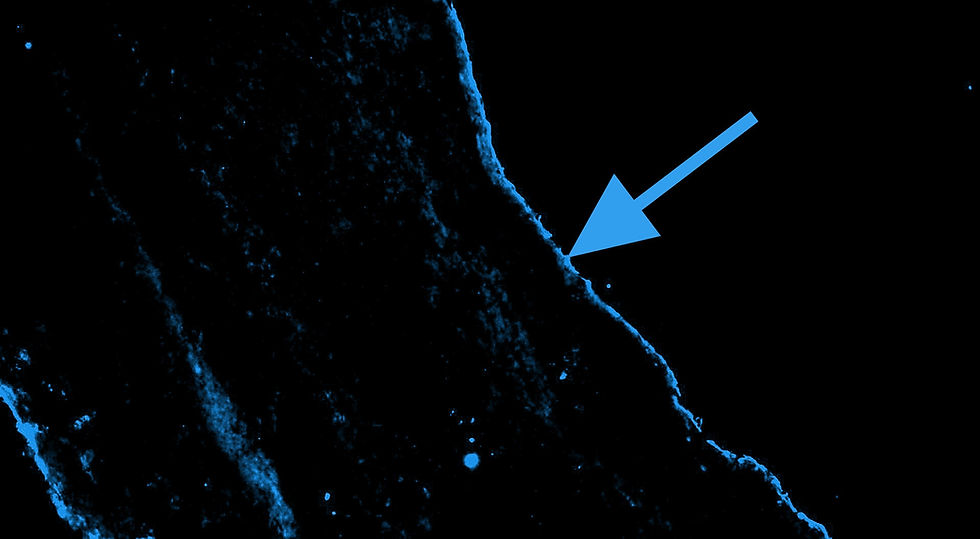
14 DAYS.
A living lining formed on the graft in just 14 days in our first large animal study.
Traditional grafts never form a living lining.
_10x%202_rgb_CH(Cy3)_CH2.jpg)
No clotting, no adverse effects. Traditional grafts clot fast in similar studies.
No clotting, no adverse effects. Traditional grafts clot fast in similar studies.


The 2 options surgeons have today
Synthetic Grafts
High risk of clotting.
Up to
0%
failure rate within
2 years
Pashneh-Tala et al., Tissue Eng Part B, 2016, Fig. 1.
The patient's own vein (Gold Standard)
Works, but adds hours and a second wound.
~
0%
of leg-bypass patients have
no ideal vein to spare
McGevna et al,. Annals of Vascular Surgery, 2026
A graft that works could help ~750,000 patients in the US every year.


Creating replacement blood vessels.
SEED. IMPLANT. REGENERATE
SUPPORTED BY





Backed By
Our investors include founders and CEOs, senior executives at $100B+ companies, and a Nobel laureate.




bottom of page